AI-Powered Frontend: Integrating LLMs Into Your Angular App Without the Hype
DevOpsDays Dallas 2026
Abstract
Plenty of teams have built an AI demo. Far fewer have had to support one at 2 a.m. This talk walks through Lodgic, a working Angular hotel-search app where a natural-language request — "show hotels in Dallas under $200/night with a pool" — becomes a validated set of filters. The model proposes; the application decides. We follow one request end to end: the Angular service, the Node/Express backend that keeps the API key out of the browser, the tool schema sent to Claude, the Zod contract that every proposed filter has to satisfy, and the Angular signals that stage criteria while text is still streaming and commit them only after validation succeeds. Then we break it on purpose — a truncated stream, an invalid price — and recover. The close is the operational question: what a trace, a timeout, a retry budget, and a clear failure state have to look like before this is something you would actually ship.
From the stage
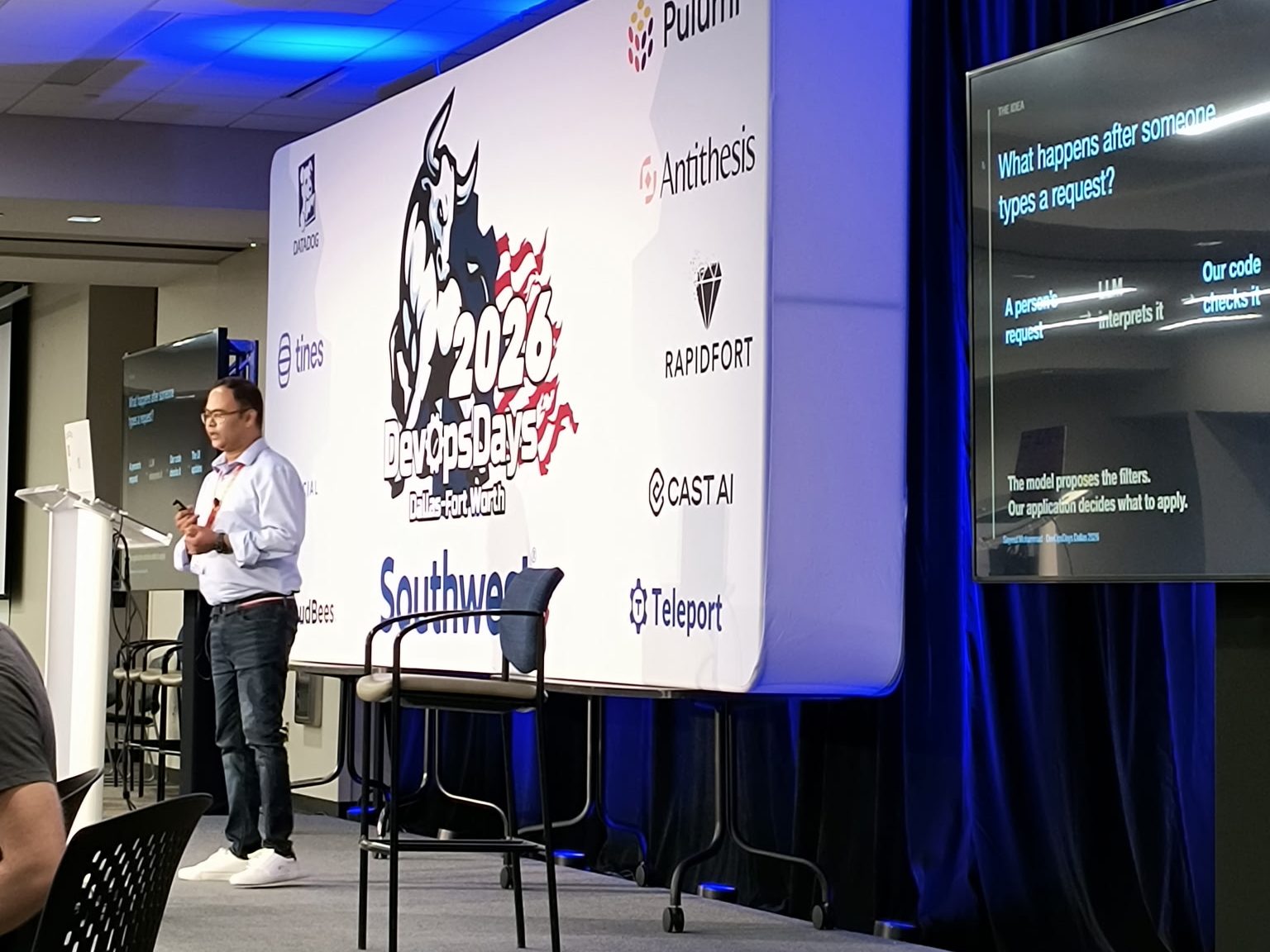
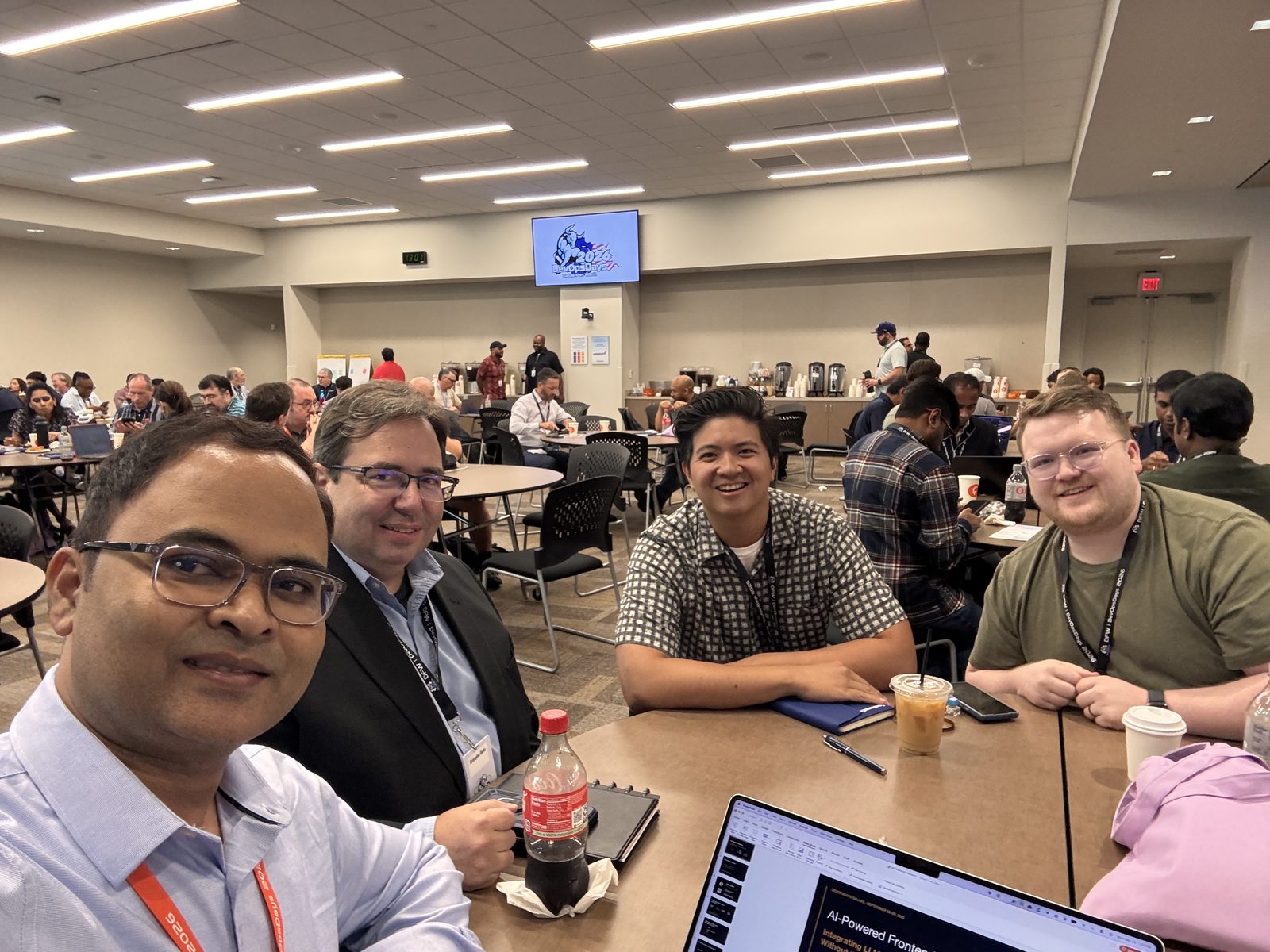
Talk highlights
- 01
The model proposes. Your code decides.
- 02
Keep the key, the prompt, and the validation on the server.
- 03
The prompt asks. Application code checks.
- 04
Stage while streaming. Commit after success.
- 05
"Done" is more than one thing.
What would you need at 2 a.m.?